Showing posts with label Hope Floats. Show all posts

Wednesday, January 16, 2013

Suicide Runs

My wife tells me that I am obsessed with fishing. I suppose she's right; she usually is when shining a light on any of my many peccadilloes. And one need look no further than this blog for proof of my obsession, but to say I am obsessed is really only half the truth. While I am always thinking of fishing - the fly, cast, hook set, and the ensuing ballet - I am also compelled to get out there and do the deed. I need to fish.


Thinking, talking, or writing about fishing neither satisfies nor sustains me. I need to step into the water and wet a line. I relish that moment when I lay out a cast a little farther than I'm usually able, turn over the leader as leaders were meant to turn over, and place the fly just about where I hoped to place the fly. I need to be there in that the moment when a blackened and scarred snout emerges from the grey green depth. Even thinking about it now, I can feel my heart skip as I wait for that imagined fish to inhale my diminutive and poorly tied hendrickson. I need that moment as I need the love of my family, and could no more abandon the water I fish than I could forgo the water I drink. Fishing nourishes me every bit as much.


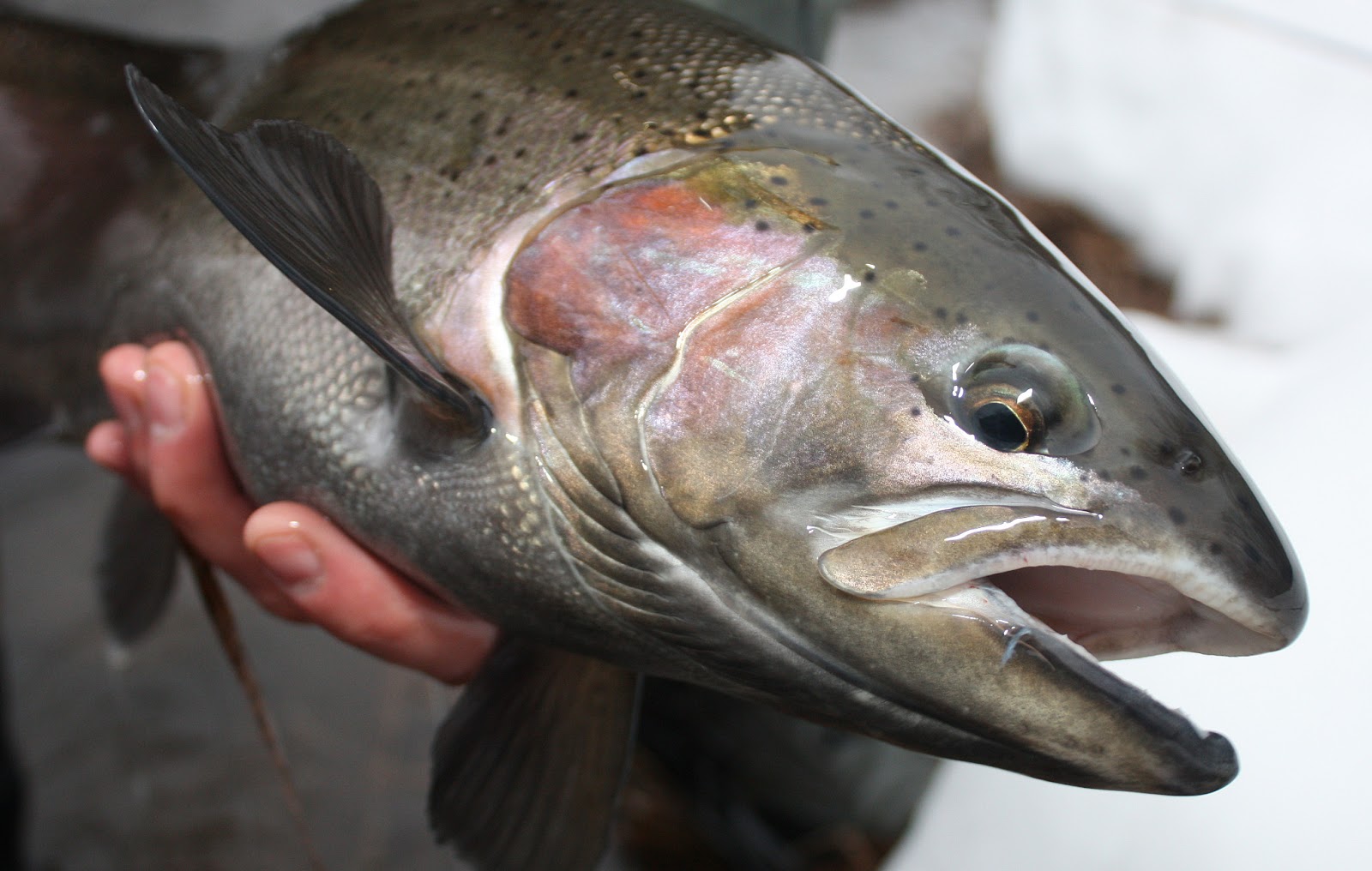
Enter the sting of a new year's weather and an`annual winter-run of steelhead. If not for steelhead, January, February and March would mark a barren, dreadful season. Steelhead save us - the afflicted - from ourselves. Steelhead give us hope at a time when many other anglers can do little else but pine for warmer days and open water.
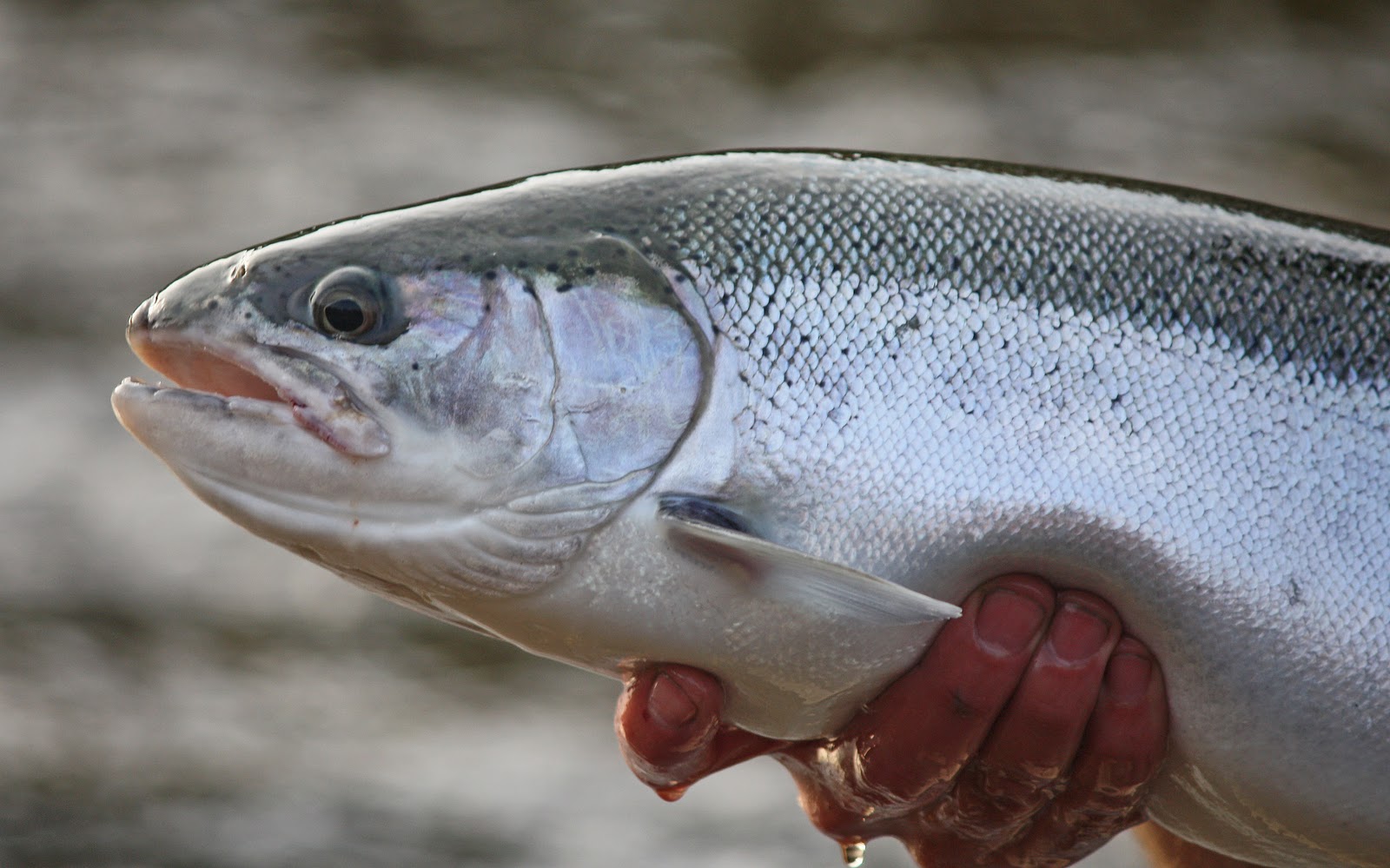

To my way of thinking, there are few game fish that are quite as game as a fresh chromer, even when water temps approach freezing. Few animals are quite so fast, and fewer still as unpredictable. When a steelhead enters the river she is hell bent on procreation. When she is hooked, every ounce of that preternatural, adrenaline fired sex drive pushes her toward escape. The takes are sometimes very soft, a series of gentle, almost imperceptible taps. More often, however, a steelhead will attack the fly with absolute abandon - be that fly a #8 beaded stone or a #2 Purple Peril.   


And what won't we do to satisfy that January jones, to get that mid-winter piscatorial fix? In my little corner of of the world, the closest steelhead are Salmon River fish - two and a half hours away. On average, we make the trip some three to five times a month. That's two hundred ninety miles and five hours per round trip. Two hundred ninety miles and five hours of sore backs and heavy eyelids, bad weather and snow slick roads. Most days, it's a suicide run to get from here to there and back again. To some small degree, we're taking our lives in our hands every time we make the trip.


"Is it worth it," my wife asks. "Is it really necessary to drive all that way for a fish?"

I smile at the question, kiss her cheek, and slough off into the living room to play with the kids. She doesn't understand, but in her defense - few people do. We don't make the trip for a fish.

Suicide runs aren't about steelhead. Suicide runs are about opportunity. They're about possibilities, slim chances, and overcoming the odds. Perhaps more than anything, they're about hope.

Few things could be better, and fewer still are quite as necessary.


Wednesday, November 21, 2012

The Salmon River: A Trip Report (Part Three)

Day three marked a turning point in the trip. Once again we were out of the rack by 3:00 a.m., breakfast was another two dozen eggs (chickens hate us) - this time with a side of sausage (from pigs raised by one of our group, Mike Healy). As soon as we donned our waders and stepped outside the cabin door, we could feel change in the air. Each of us remarked on it. This was going to be the day; we knew it from the outset. For the first time in three days, we were genuinely hopeful (and hope arrived just in time as Shawn and Mike were slated to leave before the end of the day).

Perhaps because we sensed the change, perhaps because we're gluttons for punishment, or maybe because we're simple minded chuckleheads - we decided to revisit the run we had been fishing for two days. To a certain extent, fishing this particular run has become something of a tradition - we get together in November, and we fish this one piece of water. Even more than giving a nod to tradition, however, we were convinced that the fish were there. We only needed for things to heat up and turn on.

As it happened, things did heat up - both literally and metaphorically. Day three witnessed a dramatic change in the weather. The cold front that had been so persistent throughout days one and two finally gave way to weather that was downright balmy by comparison. Whereas the high temperature over the first two days might have scraped the low side of 40 degrees, by the afternoon of day three the air temp had exceeded 60 degrees, and the fish responded.

Everyone hooked fish that third day. At one point, we had hooked so many on the swing, I remember thinking that fishing with the long rod should always be so easy. If the fishing was easy, the catching remained difficult for just a while longer. By mid-morning I had jumped three solid fish, and as they did the day before, each came unglued. As if to rub a little salt in the wound, Brillon's third swung-up steelhead came - once again - to a generic Popsicle style fly in purple and black. Black over purple was the color combination all week long.  

Bug chuckers are a funny bunch. We love our friends; really, we do. We want to see them be successful, and we want to share in that success. We chase their fish with our nets. We photograph their catch, and post the pictures on our blogs. We do this - not because we expect our friends to reciprocate - but because they are our friends, and we love them. But love isn't enough - is it - to take the sting out of a friend's high rod?


While I was happy to see Shawn hook the fish he did, I have to admit that the last one stung just a bit. At the point in the morning when I looked upstream, and watched Shawn's rod buck in synchronized rhythm with the desperate antics of yet another steelhead, I was on the verge of piscatorially induced hara-kiri. I had jumped three fish and had at least two other pulls (maybe three but one might have been that snag that pulls back - you know the one). Yes, when Shawn hooked that last fish ... it hurt.

But the river gods weren't intent on my continued suffering. After a disappointing skunk on the second day and an early morning that saw several fish released at an unacceptable distance, I finally stuck one with which I managed to stay connected. That one fish was all I needed; anything else was gravy.

And there was gravy, but the details aren't of any real consequence. Suffice to say we did well on day three. Shortly after noon, Healy and Brillon decided to call it a day, packed their things, and said their goodbyes. Just before they left, Ben and I were joined by Adam and Ben's father, Milo - both of whom were eager to wet a line. Much planning and attention had been given over Milo's time on the water as he had never hooked a steelhead.

Milo Jose first cast a fly rod some fifty odd years ago. To hear him tell it, he had been rather successful as a young man growing up in Idaho's corner of the Rockies, but his most memorable fish were all caught in San Francisco Bay on conventional tackle and hardware. He didn't quite know what to make of the 11' rod we put in his hands, and our first afternoon on the water was spent teaching Milo a basic switch cast. He was a quick study. After an hour or so of practice, Milo felt his first sign of life at the end of the line.


To Be Continued

Thursday, June 7, 2012

Milestones

*** Disclaimer ... All that follows is very personal in nature, and probably not worth your time. If you're looking for fishing photos, casting videos, or a fly tying how-to article then this post will not be for you. Go get your car's oil changed or yourself a piece of pie ... if I were you then cherry or apple would be my first choices, but I suppose Key-lime or chocolate cream would suffice. ***

I remember the first time I ever recognized the pride my father felt at witnessing one of my accomplishments. I was nineteen years old, and for much of my adolescent life I had been something of a prodigal son. Throughout high school I was a poor student, but not because I couldn't handle the work. Rather, I lacked focus and ambition, and like so many of my peers I was more concerned with girls than grades. I drank alcohol to excess, came home far past curfew most nights of the week, and even had a brush or two with the law. My parents tried, but the more they tried the less inclined was I to do the same.


Even twenty odd years after the fact, the reminiscence is tinged with regret. My mother and father deserved better, and I was too stubborn, too juvenile to understand a son's duty to his family. Fortunately, time has a way of healing the rifts between parents and their children, and I think this is especially true of fathers and their sons.

For my father and I, the process of reconciliation began one chilly November morning on the red-clay parade fields of Fort Benning, Georgia. On that day, I stopped being a delinquent child, and started being a man. On that cold November day, so many miles from home, my mother pinned a blue cord on the right shoulder of my uniform, a cord that signified my status as an infantry soldier in the United States Army. My father shook my hand, looked straight into my eyes, and told me that he was proud. I felt - both in the steel of his eyes and the stone of his grip - that he meant what he said. He was proud, truly and genuinely proud.


That moment was for me a rite of passage. My parents, my father in particular, saw me differently on that day. Even though my path was so often uncertain, on that day I managed to navigate my way out of the morass of my youth, and become the person Mom and Dad had known I could be and had so hoped I would be. After my service was fulfilled and I returned home, my father treated me not so much as his child but as his peer. We talked as men talk, and together we did the things that fathers and their grown sons do.

These memories were refreshed on a recent trip to the river as a friend and I drove along a country road that parallels the river's course. As we navigated its many twists and turns, we passed a young boy of maybe 10 or 12 years and a man that was almost certainly his father. The boy was seated behind the wheel of a well worn, emerald green John Deer lawn tractor. His father was explaining - quite vigorously explaining - the purpose behind each pedal, button and lever. Next to the tractor, seemingly discarded in favor of the larger piece of machinery, was a walk-behind push mower. To my eye, the scene had the appearance of a graduation. The boy had reached some sort of landscaping benchmark, and was being rewarded with the tractor and his father's guarded trust.


Accompanied by thoughts of the boy, his father, and memories of my own passage into manhood, I quickly settled into a cast-step rythym, flailing the water as best I could. Before long I was into a good fish, which I quickly played, photographed, and released.


My eyes followed the brown as it swam off into the current, eventually losing itself amongst the cobble. I waded downstream a stretch, and spent the rest of the afternoon watching my friend - who had been learning to double-haul - cast to rising fish. I thought of the pain I endured while learning the same cast. I thought of the years I spent on the bends and twists of the river. I thought about that last fish, and I thought about my first fish. I thought about the milestones I've passed as an angler; milestones that have made me - at least as much as having been a soldier or a son - the person I am today.


That is - perhaps more than anything else - what those folks who don't fish may never understand about those of us who do. The milestones we encounter as fishermen are sometimes as significant as any other we might experience in the various facets of our lives. Learning to cast and then learning to cast well, tying that first perfectly proportioned fly, hooking our first fish and landing the last: we learn something from each of these and myriad other moments. Not only do they make us better anglers, but oftentimes they makes us better people.

Yes ... the river is both instructive and redemptive. She teaches us patience, and the need to sometimes move more slowly. She teaches us to forgive ourselves of our failings, and to see past our partners' peccadilloes. She shows us triumph and disappointment alike - often in the same afternoon - and we learn to smile regardless. Perhaps more than anything else, the river teaches us hope. Hope for that next fish. Hope for a better day. Hope that we'll recognize the importance of the moment when the moment happens.

And it may just be that hope is the very best of things.