Tuesday, March 12, 2013

Sensations

Let's get right to it ...

The four most under-appreciated sensations in fly fishing ... so sayeth The Rusty Spinner.

#4. The distinctive "Thunk, Thunk, Thunk" of a newbie's knuckles beating against the handle of his reel's backward spinning spool - while the steelhead he's inadvertently hooked does its best to run back to the mouth of the river.

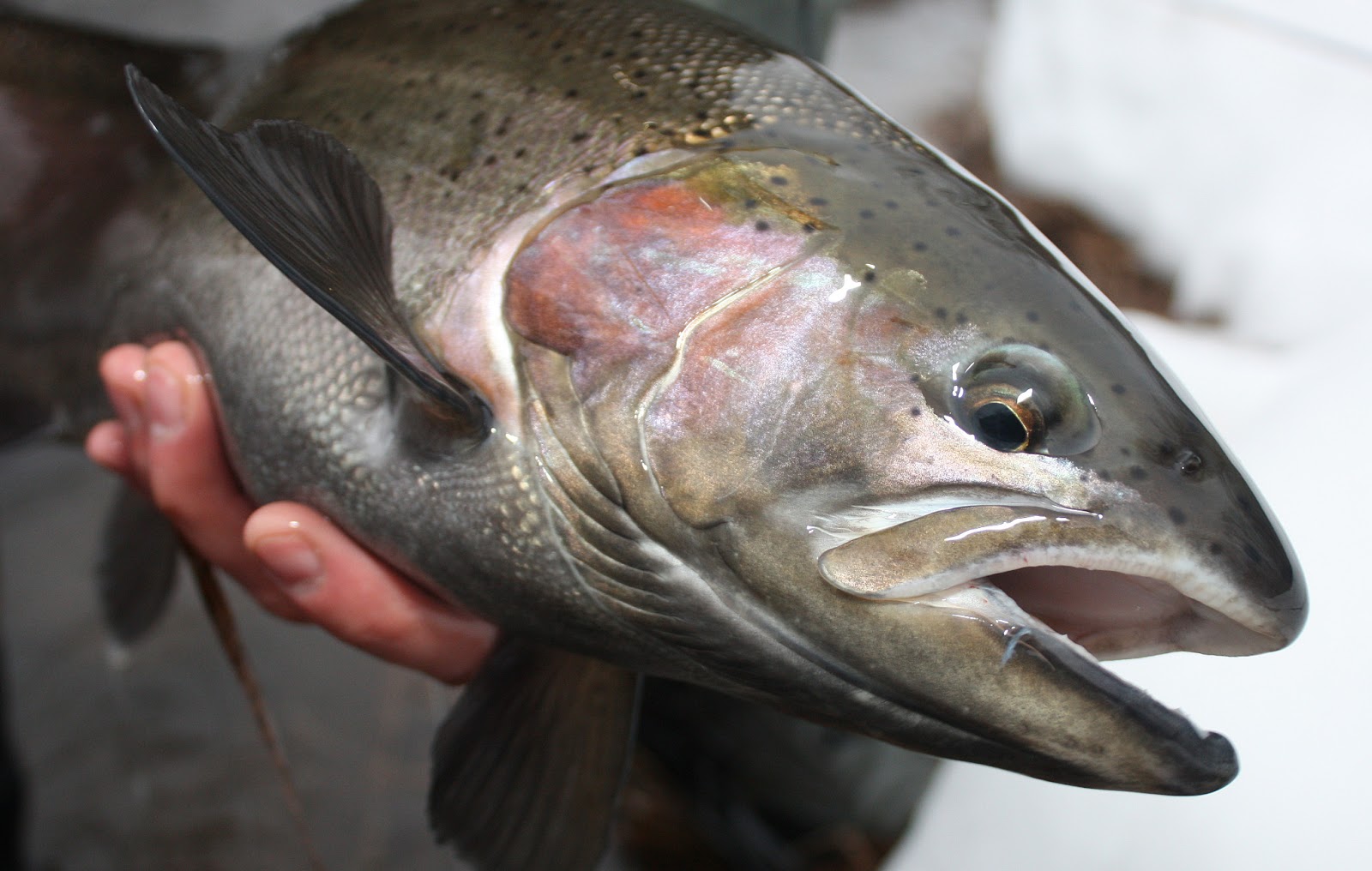
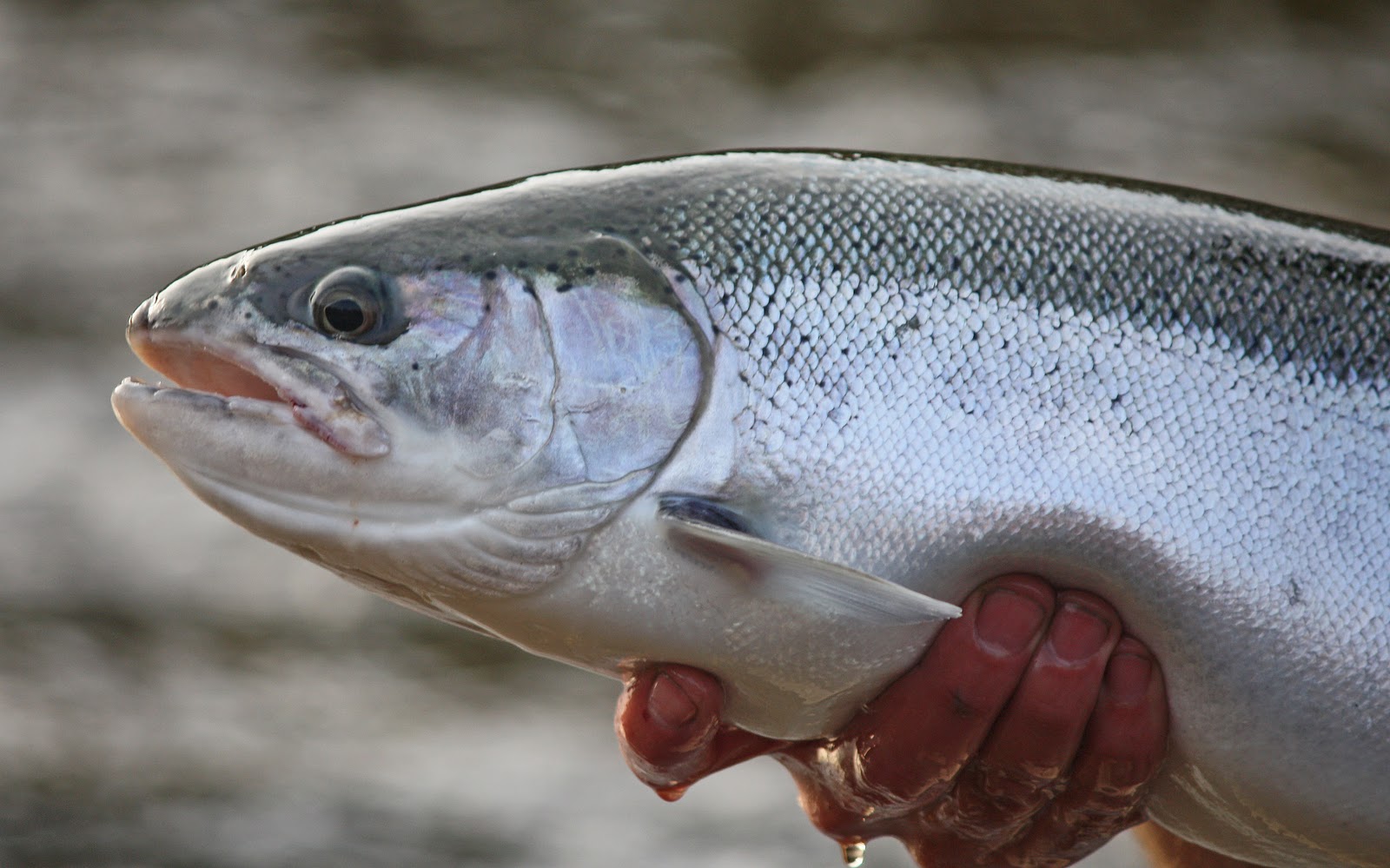
A steelhead is a special animal: streamlined, strong, fast, ridiculously fast in fact, and almost wholly unpredictable. I've been led to believe that the only other fly rod quarry that comes close to eclipsing the steelhead's athleticism are albies and tarpon, but I haven't chased either so I'm left to wade my little freshwater corner of the world relatively certain that steelhead are the most dynamic fish that bug chuckers like myself are ever likely to chase.

 Photo: Benjamin Jose

And because few fish compare to the steelhead for its strength and tenacity, little can be done to prepare the uninitiated for his or her first hookup with a chromer. Mine came nearly 15 years ago on the Salmon River in New York. My friend and guide for the day, Shawn Brillon, had taken me to one of the spots on the river notorious for being a petting zoo. I was assured that the fish would be stacked one atop another like strippers on a banker's lap. If a newb (stealing the term from my video game playing students) was going to hook a fish anywhere in the river then that spot was as good a bet as any and a better bet than most.


Five or six hours after having first stepped into the water my arm was growing sore from the repetition of casting, and my mind was drifting off to warmer and more prolific fishing trips. Naturally, it was in that moment - a moment in which my cold addled brain had finally shuffled off its mortal coil and began to travel the astral plane - when the first steelhead I had ever hooked (and the largest I've hooked in the fifteen years since) decided to swallow my ridiculously gaudy fly. Everything happened so quickly that my synapses were overloaded and simply ceased to function. In that moment, I wasn't an angler; I was a spectator witnessing an angler's demise. I had as much hope of setting the hook, adjusting my drag, and fighting that fish as I did of being named Playmate of the Year. As a consequence, I was left with little more than broken images of a tail as wide as both my hands when splayed side by side, a short and frayed length of tippet, and three sore knuckles on my left hand.

Such is the case with most bug chuckers who opt to chase winter chrome. They read about steelhead for years before finally stepping into the river. They tie dozens of flies, and invest thousands of dollars in gear. They almost always go sleepless the night before that first trip (sometimes that insomnia follows them throughout their steelheading lifetimes), and when the day finally arrives they usually finish out with little more than tired eyes and raw knuckles.

#3. The penetrating stench of thousands of putrefying salmon carcasses.

How do I describe the aroma that descends on a king salmon river in the weeks after the annual spawning run has begun?  Hmmm ...


Imagine a piece of road kill; a piece of day-old road kill. Perhaps it's a raccoon or an o'possum. Perhaps the dearly departed is a porcupine or your neighbor's cat. Whatever your choice, put the image foremost in your mind. Now imagine you've discovered the animal as it stews and boils in the blistering August sun. The coon - or perhaps the cat - is bloated near bursting. Maggots crawl from all of its orifices - ALL of its orifices, and fat green-bodied flies swarm about its head.

Now consider that immediately prior to its death, the animal crawled out of a fetid bog. The fen and our festering friend both stink of mud and decay. There's a damp sourness that hangs in the air. You feel soiled, as if you're somehow infected by the bitterness.

And we would be remiss if we forgot the Amish. Yes, the Amish. As it happens our friend has died in Amish country. The devout frequently ride this particular stretch of highway in their small black buggies, beards and bonnets blowing in the wind. Their horses - straining against the leather rigging - have made the trip from farmstead to farmstead so many times that the animals run on instinct. They hardly notice the trail of dung that marks their route. As it happens, our friend's slowly disintegrating body has come to rest upon an especially generous pile of Mennonite manure.

Such is the penetrating aroma of a salmon river during the height of the run. The stink lingers for weeks, but that stench ... that gloriously putrid stench ... is certainly a harbinger of better things to come. Steelhead.

As long as there's death on the wind we know there's steelhead on the way.

#2. The don't-so-much-as-breathe anticipation you feel when a carp considers your fly. 

You're seventeen years old. You and your girl are sitting on the bench seat of your father's brand new, 1990 Nissan hard body pickup. It's late, very late; on any other night you could expect an earful from the old man as soon as you walked through the door.

"You have any idea what time it is? ... not a word ... shut it. Not ... a ... word. Say good night to your mother. She's been worried sick. You and I will speak tomorrow. I would cancel any plans you might have, and there'd better not be so much as a scratch on that truck."

But tonight isn't just any night. Tonight is prom night. You've a pass from your mother and your father's reluctant blessing. Pop let you take his truck because he'd be damned if he was going to pay for a limo, and you've discovered that the truck works just fine. More than anything else, it is the truck that allows you this moment.

The festivities have been over for an hour or so. You, your bevy of friends, and their respective dates had been dancing vigorously and awkwardly for four hours. All the while your girl took your breath away. Never in your wildest pubescent imaginings had you seen such a beautiful creature. She was an angel on Earth, and she was there with you.

And then the two of you were alone in Dad's pickup; parked on some nameless, unpaved, backroad - music playing quietly on the radio. Your lips were close enough to share a breath, and her eyes - oh, the look in her eyes. Your hand slid slowly up her stockinged thigh, and she did not protest. Instead, she moved still closer ...

To this day you vividly remember your hand shaking. You remember the bead of sweat on your brow, and you remember thinking, "Is this really happening? Is this REALLY happening?"


Such is carp fishing. Every time a carp inspects a fly, the bug chucker connected to that fly holds his breath. He wonders if this will be the one. Will the fish eat? Usually, the answer is a resounding "No!" but every so often the answer is, "Yes!" Our hands shake, and maybe we even sweat a little. That's the joy of carp fishing. Nothing is certain, and every time is like the first time.

Yes, I just compared carp fishing to sex ... don't knock it until you've tried it (both carp fishing and sex).

#1. The gut wrenching agony we experience after losing what may have been the best fish of the year.

You can fast forward the video to about the 48 second mark, and then watch the hysterics ensue. My reaction kind of says it all.


That's the funny thing about disappointment though; it is disappointment - and perhaps an equal dose of hopeful anticipation - that keeps us coming back to the river. All of us know loss, but regardless of that loss we're always back on the water at the first opportunity. Losing fuels us. Losing shapes our memories. Losing drives us to pursue the ephemeral and chase the intangible. In many ways, losing may be the best part of the game.

Friday, March 8, 2013

The Hatch is On!


Oregon resident Chris Santella must have quite the bucket list. He is the author of several enormously popular travel and adventure books: Fifty Places to Fly Fish Before You Die, Fifty Places to Dive Before You Die, Fifty Places to Hike Before You Die, and Fifty More Places to Fly Fish Before You Die amongst others. Santella's books span such an eclectic mix of topics and locations that I'm not sure anyone - regardless of time or resources - could possibly hope to visit even a small fraction of the places his titles feature. For my part, I'll likely only visit any of those places when I dream, and when I dream - I dream of golden dorado in Bolivia and rainbow trout in Kamchatka (both covered in Fifty Places). I will have lived a full life if I live to see either place. 


Santella's latest book is slated for release on April 2nd of this year. The Hatch Is On! has a very interesting premise insofar as it deviates slightly from Santella's previous work. This book is not necessarily about locations - although the places mentioned in the book feature prominently. Rather, The Hatch Is On! is about the one thing that - more than any other - makes fly fishing distinct and different from other forms of angling. The Hatch Is On! is about annual rites of nature that draw fish and fishermen alike: green drakes and salmonflies, golden stones and hendricksons, olives and sulphurs. The Hatch Is On! is all about the hatch. As it happens, one of the hatches detailed in Santella's book is one that I know well. 

Tricos usually begin to appear on the Battenkill (to say Battenkill River is redundant as kill means river) in mid July. By the time the morning spinner falls reach their peak, the fish have keyed in on the diminutive bugs, and the fishing can be simultaneously very rewarding and excruciatingly frustrating. There's something about watching an eight inch wild brook trout follow a fly for 10 or 12 feet before refusing the offering that can get into a bug chucker's blood. I'd be lying if I said I have the hatch figured; to the contrary, the hatch mystifies me as much now as it did when I first chased the bugs from riffle to riffle. I am fortunate, however, to know someone who does have his finger on the pulse of the Battenkill trico. As it happens, this man is a close friend, and I wasn't the least bit surprised when I was told that Santella had approached him about penning a chapter for the book.     


Shawn Brillon is a curmudgeon. It is ironic that for most of his adult life he has worked in industries that require him to associate with people because as a rule - Shawn is not a people person. I've known the man for nearly two decades, and some days I'm convinced he only tolerates me because I'll drive to the river and I've exceedingly good taste in beer. What Shawn lacks in people skills, however, he more than makes up for with an uncanny ability to commune with all things piscatorial. Every aspect of my game - tying, casting, reading water - has improved directly as a result of my having known Shawn. He is exceedingly talented, and when one finally surmounts the brusque exterior, he can be among the best of friends and teachers. More to the point, Shawn is a bona fide trico-whisperer.

Anything else I might write at this point would likely seem disingenuous. What I'd like to do instead of continuing to sing my friend's praises, is to leave you with a small excerpt from Shawn's contribution to The Hatch Is On! - including the recipe for one of his favorite trico patterns (both reproduced here with permission from Chris Santella). Again, Santella's latest offering will be available from Amazon.com and other retailers come April 2nd, but the book is available for pre-order even now. You'll find the details here ...

Shawn's "Get-It-Dun" Trico as appearing in The Hatch Is On! (photo: Shawn Brillon)
Hook: Orvis Big Eye dry fly, 22 to 24
Thread: Black 8/0
Tail: Cream hackle fibers or Cream Mayfly tails (aka Micro Fibetts)
Abdomen: (Male) stripped peacock eye or Black 8/0 thread ribbed with white 8/0 thread (Female)  bleached stripped peacock eye - use as is or tint quill with olive green marking pen, or 8/0 White thread.
Thorax: Black Dry fly dubbing sparsely dressed.
Wing: CDC wing post white, or white turkey flat.
Hackle: Grizzly dry fly tied sparsely. 

"The wild browns of the Battenkill are the kind of selective trout that can make a difficult hatch even more maddening to negotiate.  The river is slow moving, the upper half (where the best Trico emergences occur) has a silt bottom, making wading ill-advised; and the fish hug the banks.  Nor is there much structure.  “A spot where a tree branch hits the water passes for a riffle,” Shawn added.  “It might be the only break in the water for 200 yards.  Even the native brookies are skittish.  The Battenkill is the only river I have ever fished where brook trout will turn your fly patterns down after following them for 20 feet and not come back to take a second look.  You have to make a downstream presentation on the Battenkill, and you have to control your expectations; a good day is three or four fish.  The fish are tough, and you should feel happy if you find a few.

“In the early days, I ran through the gamut of questions as to why I couldn’t consistently hook up during prolific Trico hatches.  I examined my presentation techniques; they seemed correct.  I looked at my fly selection—it seemed spot on.  So I began a closer evaluation of the flies themselves.  I returned to the river and started collecting naturals and comparing them to all the commercial patterns I’d used.  I figured it was time to take what I had observed in the field and apply it to some of the patterns I had had some success with. I concluded they were over dressed, the tails too short, the bodies too fat and bulky, the wings too large.  Also, there was little consideration of the color difference between the males and females.  Not all tricos are jet black in color; the males (which hatch before dawn or late the night before) are black, but what came off the water in the early morning were olive to cream in color and a little larger than the males.  To complicate matters even more, the spinners were a mix of smaller black-bodied bugs and larger white-bodied bugs ...

... This particular day I sat down and watched this angler have his way with several of the nice fish that I had seen sipping spinners over the past several weeks.  Being a guy who goes to the river to relax and get away from the reality of life, I always respect the silence and don’t tend to talk to anyone who’s fishing.  But this time I just had to figure out what this angler was doing or what fly he was using that granted him such great success.   I purposely hung out until the angler started to walk in my direction. We introduced our selves, and he said he knew who I was, ‘The Orvis guy who worked in the retail store.’  To this day I cannot recall his name, though when I mentioned him to other Battenkill regulars, they called him ‘The Heron.’  As we chatted, I learned that we had lots in common:  We both fished bamboo rods, had CFO reels and knew the river in and out.  The difference was that on this day, he was catching fish.  Eventually, I just had to ask, ‘What are you using to hook so many nice fish?’  I about passed out when he passed his rod to me so I could examine a size 10, heavily chewed-up Royal Coachman dry. That’s right, a huge Royal Coachman.  As I laughed, he explained that he gave up trying to figure out the Trico hatch 20 years before and went back to the confidence fly of his youth."

- italicized text excerpted from The Hatch is On!, Chris Santella (2013)

Thursday, February 21, 2013

Orvis Fly Tying Sale

Not sure why I've taken 21 days to post this, but if you're looking for tying material this is about as good a sale as you're likely to find. Orvis is offering twenty percent off all tying materials and tools -  excluding those from Renzetti and Whiting - for the entire month of February. Bobbins, hooks, feathers and fur ... you'll buy it eventually ... may as well save yourself some scratch. Now might even be a good time to get that Regal or HMH vise you've been lusting after. The link below will take you directly to the tying section of Orvis' online store. I receive no compensation from the company (unfortunately); I just thought some of you might like to save a few dollars. The hooks - most of which are rebranded Daiichi or Gamakatsu - are an especially good deal.


http://www.orvis.com/store/shop.aspx?dir_id=1273&shop_id=1448


Wednesday, February 20, 2013

Why?

Since the inception of The Rusty Spinner, I've been asked many times over why I go through the trouble of maintaining a blog. Why do I burden myself with all the links and videos, with photographs and with writing? Is it vanity or exhibitionism? Do I feed on the little bit of praise I occasionally receive? Am I a collector of followers? Am I self important? Do I hope the blog will somehow magically morph into magazine articles or a book?


The truth is that The Rusty Spinner has been around in this form and others for over a decade - the blog began as a website devoted to the history and chronology of the Orvis CFO series of reels - and in that time I haven't received even one nickel for my efforts. Any reward I've received has been intrinsic and intangible to anyone but myself. Why do it then? When I think about it, the answer to that question almost certainly stems from the years I spent working in a fly shop.


Make no mistake, being a fly shop flunkie is hardly a glorious vocation. First and foremost, fly shop work is retail work, and sometimes no better than making minimum wage in a second hand clothing store that caters to tweens and hipsters. Stop for a moment, and imagine that special hell.

"Where can I find your free range, organic, "Like a Boss" belts?"

"I was wondering ... do you stock Hello Kitty socks in a men's large?"

"I don't believe this, Margot! They're out of henna hair dye."

"Why isn't there a bike rack out front? I ride my little fixie everywhere, and I have to say ... it feels so good to be part of the solution rather than part of the problem. I'm sure you know what I mean."

"Excuse me ... you seem to be out of "I Heart David Sedaris" graphic tees, when will you be getting more?"


What must it be like to be subjected to that kind of inane patter all day, every day, for less than $10.00 an hour? Just thinking of it makes my ears bleed, and as difficult as it may be to believe there are those days when working in a fly shop - a shop packed with all the latest and greatest rods, reels, flies, and fly tying material - is only marginally better than eight hours of selling black rimmed, lensless glasses to people with 20/20 vision.

"Do these waders come in an antique ivory taupe?"

"Will this line make me cast farther?"

"What do you mean you don't sell nightcrawlers? I thought this was a fishing store."

"Where do you fish?"

"My rod broke ... spontaneously and through no fault of my own."


The single saving grace is that this type of chatter was the exception, not the rule. Most folks - men, women, and children - were relatively well informed and comported themselves with a modicum of sense.

"These waders only come in olive? Perfect. One less thing to think about."

"I wish they'd make a line that casts itself because I just can't double haul with a flask in my line hand."

"I know this is a fly shop - and when I'm alone I'll definitely be back - but right now there are four kids in my car - four kids who want to go fishing. Any idea where I could get a tub of nightcrawlers?"

"If you had only two days to wet a line before you left for home, where would you fish?"

"I broke my rod. Like a chucklehead, I left the freaking thing laying across the truck of the car. Smashed her good. I may have had one too many IPAs ..."

And this is what I most enjoyed about working in the shop. Most of my day - each and every day - was spent talkin' fishin'. My customers and I talked bass and steelhead, trout and pike. We talked tarpon in Florida and kings in Alaska. We talked line and tippet, knots and rigging, double hauls and single speys. We talked about the Spring Hole, the Bat Hole, and a river whose name we never used. Working in a fly shop was my opportunity to be immersed in a lifestyle that I thoroughly enjoyed. When life led me from the shop into a teaching career, the one thing I genuinely missed was the opportunity to chat with like minded folks. Hence ... The Rusty Spinner.


The Rusty Spinner is my opportunity to continue the conversation. This blog isn't about marketing. It isn't about making money or getting free swag for ridiculously contrived and complimentary reviews. The Rusty Spinner is my way of throwing my thoughts out into the ether in the hopes someone might shout back. In that regard, my time spent at the keyboard has been time well spent. I've met folks from all over the world through this blog, including a few who live nearby and have become friends, confidants, and fishing partners.


The Rusty Spinner is my way of remaining on the periphery of a world that I've long since left. Writing about fly fishing is likely as close as I may ever again come to my time in the shop and the conversations I had there. As time passes and technology changes, I suppose I am likely to lose this outlet and my connection to that world. Still, I can't help but think that the time I spend here at this keyboard - uncompensated as it may be - is time well spent. Next to the riffles and pools of one very special river that shall forever remain unnamed, there are few places I would rather be than sitting here ... talking to you.

Thursday, February 14, 2013

Mot Juste: Redux

Three weeks. I've gone three weeks without wetting a line, and this morning my piscatorial withdrawl is hitting me especially hard. I'm forced to dive into my day dreams, imagine trips yet to come and remember those that have already happened. What follows is a post that first appeared January 9th of 2012. It is the chronicle (or perhaps non-chronicle) of what might have been the most exciting day on the water I have ever witnessed. The river gods were generous in a way they haven't been since and may never be again. Ahhh memories ...  


mot juste (noun) mō-ˈzhuest: exactly the right word or phrasing

As much as I enjoy fly fishing and everything the sport entails, I must admit that bug chucking isn't always the most exciting endeavor. That isn't to say that fly fishing isn't my passion, but let's face it, most days on the water pass uneventfully. We make a few hundred casts. We catch a few fish. We have a good but otherwise unremarkable day.

Yesterday was not an unremarkable day.     


Yesterday was something altogether different. Yesterday was the kind of day that haunts the average bug chucker - alchemically changing innocuous daydreams into obsessive compulsive disorder.  Yesterday was a day of fishing so exceptional as to leave both audience and actors alike wondering if a second such day could ever be possible. Yesterday was special.

And having experienced yesterday, I realize I've an obligation to share the story with my friends and readers if for no other reason than to let them know that yesterday is possible. So now I sit here at my keyboard, trying to string together the narrative of a day that was entirely unlike anything I have ever before experienced, and I find I simply haven't the words. I'm completely at a loss.   


Perhaps I lack the spectacular vernacular of a more accomplished wordsmith. Maybe I should stick to fly tying, and forget all about this blogging thing. I suppose it could be true that those who can, do; those who can't, teach (when not flinging flies I'm a high school teacher). All I can really say with any certainty is that I don't know what to say about yesterday. I don't know where to start, how to finish, or what it all might mean in the context of a season on the river, let alone a third of a century spent stream side.


Maybe it's enough to forgo the details. Maybe it's enough to dispense with the numbers, statistics and the play-by-play, and simply say we had a very good time. We had the kind of day the river gods parcel out all too infrequently, and if we never have that kind of day again then at least we'll have been given that moment, and the indelible impression of something very special. We'll have the memory of a day for which there really are no words.   


Thursday, January 31, 2013

Earning Secrets

Contour lines moved ever closer; blue lines faded to dotted blue lines and then disappeared altogether. We were off the map. In a strictly technical sense, we could have used a compass to shoot an azimuth, estimate our distance to two nearby hilltops, and then pinpointed our location on the grid, but insofar as bug chucking goes we were most definitely in the land of the lost. According to our map - a USGS topographical survey circa 1984 - the stream we were fishing disappeared into the bedrock at least three quarters of a mile farther downstream, yet there we were - knee deep in a spring fed bog that reeked of decomposition and sulphur, a swamp from which a small brook emerged that we erroneously thought might hold a brookie or two. We finished the day exhausted, with nothing more than mud splattered clothing and a torn pair of waders to show for our substantial effort.


Of course, in several decades of fishing together Adam and I have managed any number of trips that were every bit as successful as the aforementioned was disappointing.

"What do you think? Have we a plan?"

"One upstream, one down?"

"Sounds good. I'll go up, you go down. If you sting one, come up and let me know."

"Will do. Luck."

I worked slowly and methodically downstream through riffles and pocket water, both to be thorough and to avoid the dunking that had become almost standard on our exploratory missions. I remember that my first impression of the stream was that it was barren, probably ravaged by acid rain, and likely devoid of any fish worth chasing. In less than twenty minutes, however, Adam came bounding downstream - sprinting through the water and leaping from rock to rock like that gnu featured in the opening theme of Mutual of Omaha's Wild Kingdom.


Only twenty minutes since we had parted ways, and already he appeared disheveled. His breathing was raspy and came in labored gasps. Rod and vest were missing, presumably left streamside; carried gingerly in both hands was his net - as a Greek priestess might have presented an offering to her goddess.

"There's ... up ... up there ... there's a ... a waterfall ... first cast."

If Adam said much else then I didn't hear him. I was staring - wide eyed, stunned, almost certainly with my mouth agape - into his net. Struggling against the moist cotton mesh was an outsized brown trout that seemed much too big for such an inconsequential little brook. Shocked as I was, all the usual superlatives and vernacular abandoned me.

"Jeez ... wow ... that's one ... er ... a ... whoa!"


Adam beamed and enjoyed the moment. The fish was impressive in all the ways that mattered: thick and heavy, unmarred and unblemished, beautifully spotted and caught in a pool that likely hadn't seen another angler in decades if at all. Adam and I first found that stream (as we did most good things in those days) on a map, and in the twenty odd years since that first trip to its banks we've only ever shared its location with our most trusted friends and family.

As I reflect, I realize that my angling life has delivered many such moments of discovery: mud flats loaded with carp, gentle glides that are blanketed with hendricksons each spring, bass and bream by the bushel, even a nameless Montana spring creek that only locals fish and then only rarely. I've been very fortunate, but fortune only takes a bug chucker just so far. We cannot count on our good luck to see us through those too few seasons that we're given. Instead, we must be diligent experimenters and explorers who demonstrate a willingness to go off the beaten path, to travel outside the confines of our little piscatorial box. We need to take risks because it is risk that gives us the right to keep or to divulge the secrets we've learned.

I must admit that I've become complacent. I've been satisfied, sated, and perfectly happy to rest on my laurels. I've stopped experimenting at the vise, and my maps - all of them so well worn and creased - have either been discarded or forgotten on a shelf. As I look forward to the remainder of the year and the opportunities it will bring I make myself a promise. I'm going to travel outside of my comfort zone. I'm going to visit new water, and try to see old water with fresh eyes. For every dozen, proven flies I tie - I am going to tie one experiment, one Franken-Fly, and I will fish that fly at the first opportunity. I will find my way out of the bug chucking rut in which I seem to be mired. I will learn something new, and once again - I will earn my secrets.


Monday, January 28, 2013

How Cold Was It?

On our way to the river we passed a filling station that had an LED thermometer out front ...


-2 degrees ...


In the sun ...


That's a special kind of cold ...


Which I suppose makes us a special kind of crazy ... 


Or not ...


Thursday, January 24, 2013

Day Dreaming

Thinking about fishing seasons past - and about changing the look of the blog - so I thought I'd share the fish and photos that inspired and eventually became the current Rusty Spinner banner ...

The rod is a Montague Manitou - one hell of a dry fly stick - matched with a Hardy LRH.

This is the photo that eventually became our current banner.
The same fish caught a week or so later on a little 7' 4# quad matched with a Peerless 1A.
Maybe the most beautiful brown trout I ever caught.
As much as I enjoy steelhead, I can't help but think that the hendricksons will be back soon.

Wednesday, January 16, 2013

Suicide Runs

My wife tells me that I am obsessed with fishing. I suppose she's right; she usually is when shining a light on any of my many peccadilloes. And one need look no further than this blog for proof of my obsession, but to say I am obsessed is really only half the truth. While I am always thinking of fishing - the fly, cast, hook set, and the ensuing ballet - I am also compelled to get out there and do the deed. I need to fish.


Thinking, talking, or writing about fishing neither satisfies nor sustains me. I need to step into the water and wet a line. I relish that moment when I lay out a cast a little farther than I'm usually able, turn over the leader as leaders were meant to turn over, and place the fly just about where I hoped to place the fly. I need to be there in that the moment when a blackened and scarred snout emerges from the grey green depth. Even thinking about it now, I can feel my heart skip as I wait for that imagined fish to inhale my diminutive and poorly tied hendrickson. I need that moment as I need the love of my family, and could no more abandon the water I fish than I could forgo the water I drink. Fishing nourishes me every bit as much.


Enter the sting of a new year's weather and an`annual winter-run of steelhead. If not for steelhead, January, February and March would mark a barren, dreadful season. Steelhead save us - the afflicted - from ourselves. Steelhead give us hope at a time when many other anglers can do little else but pine for warmer days and open water.


To my way of thinking, there are few game fish that are quite as game as a fresh chromer, even when water temps approach freezing. Few animals are quite so fast, and fewer still as unpredictable. When a steelhead enters the river she is hell bent on procreation. When she is hooked, every ounce of that preternatural, adrenaline fired sex drive pushes her toward escape. The takes are sometimes very soft, a series of gentle, almost imperceptible taps. More often, however, a steelhead will attack the fly with absolute abandon - be that fly a #8 beaded stone or a #2 Purple Peril.   


And what won't we do to satisfy that January jones, to get that mid-winter piscatorial fix? In my little corner of of the world, the closest steelhead are Salmon River fish - two and a half hours away. On average, we make the trip some three to five times a month. That's two hundred ninety miles and five hours per round trip. Two hundred ninety miles and five hours of sore backs and heavy eyelids, bad weather and snow slick roads. Most days, it's a suicide run to get from here to there and back again. To some small degree, we're taking our lives in our hands every time we make the trip.


"Is it worth it," my wife asks. "Is it really necessary to drive all that way for a fish?"

I smile at the question, kiss her cheek, and slough off into the living room to play with the kids. She doesn't understand, but in her defense - few people do. We don't make the trip for a fish.

Suicide runs aren't about steelhead. Suicide runs are about opportunity. They're about possibilities, slim chances, and overcoming the odds. Perhaps more than anything, they're about hope.

Few things could be better, and fewer still are quite as necessary.


Sunday, January 6, 2013

River Chicken ...

"When I was a little boy every little squirt wanted to be a harpooner or a sword fisherman." - Quint, Jaws (1975)


While chasing steelhead on the Salmon River, this river chicken paid me a visit to show me how the locals get things done. For the first time in years, I had a video camera in my pocket when a video-worthy moment presented itself.